
Kronehoefstraat 85
5612 HL Eindhoven
BTW NL863902509B01

Back to case studies overview
W&D Vastgoed – AI strategy & roadmap for a better tenant experience
qw
vc
mshm
.svg)



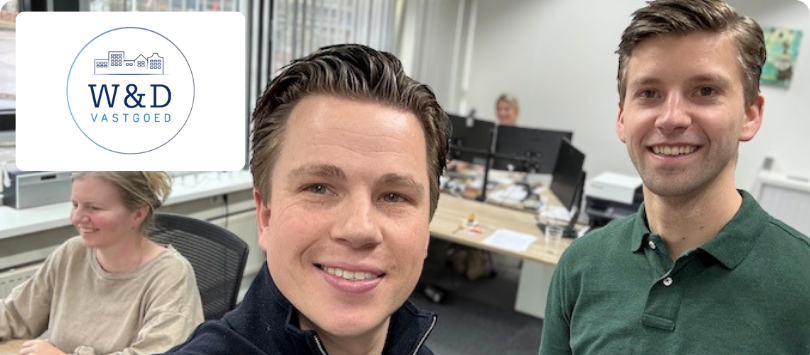
W&D Vastgoed rents out around 1,100 homes. Day-to-day management and the back office run on a small team, with the property administration in BLOX. On top of that an expansion is under way: part of the portfolio is being sold and its management moves to their own homeowners' association arm.
That creates a squeeze many management organisations will recognise. Tenant experience has to improve, because that is what the organisation is judged on. At the same time pressure on the back office must not increase, because that team does not grow with the portfolio. Delivering more service with the same number of people means something about the work itself has to change.
The question was not which AI tool to buy. The question was where automation actually pays off in their situation, and in what order.
A four-week AI opportunity scan. Deliberately a track that builds nothing, so the decision on what to build rests on evidence rather than enthusiasm.
Deep dive sessions with the people doing the work. We walk through processes as they actually go, including the detours and exceptions that appear in no process description. That is where the bottlenecks surface: where time goes into retyping, where the same answer is given for the umpteenth time, where a request stalls between two systems.
What those sessions produce is translated into concrete opportunities, and we test those for feasibility against their own data and systems. Not what is theoretically possible, but what is possible with the data that exists and the software that runs. We look at people, process and technology together, because an opportunity that works technically and fails organisationally is not an opportunity.
In a working session we present the findings: which quick wins are already available, which building blocks are needed before the larger work can start, and which business case makes the most sense to build first. We close with a worked proposal for that first solution, including the intended process, the tasks and the limits of the agent, how data quality and access are secured, and what you measure success against.
A twelve-month roadmap with priorities, tackling contract management, frequently asked questions and maintenance requests step by step. The foundation for dedicated agents on tenant questions and tenancy changes. And an approach for organising internal knowledge, because that is the prerequisite that is easiest to skip and hurts most: an agent can only answer what has been recorded somewhere findable.
We map the strongest opportunities and substantiate them, before anything gets built.


.svg)