
Kronehoefstraat 85
5612 HL Eindhoven
BTW NL863902509B01

Back to case studies overview
REBO Groep – AI-powered board minutes for HOA meetings
qw
vc
mshm
.svg)



REBO Groep manages Homeowners' Associations. Every year each association holds an Annual General Meeting, and every meeting has to produce minutes. Not a short write-up, but a document residents and board members fall back on later: what exactly was decided, on what grounds, and who now has to do what.
That work was done by hand. The meeting runs through Teams or on location, and how it gets captured differs per manager: sometimes a recording, sometimes typing along live, often notes on paper that still have to be transferred afterwards. After that roughly an hour goes into writing it up, plus the time spent replaying the recording wherever the notes fall short.
On top of that, minute-taking here comes with requirements that do not happen by themselves. The text is written in the present tense. Proposed decisions and actual decisions have to stay distinguishable. Phone numbers and email addresses do not belong in it, even when they appear in the transcript. And sections of the long-term maintenance plan and the budget have to be summarised with a reference to the appendix.
An agentic workflow that turns the meeting into a draft, and gives the manager the role they should have: final editor, not typist.
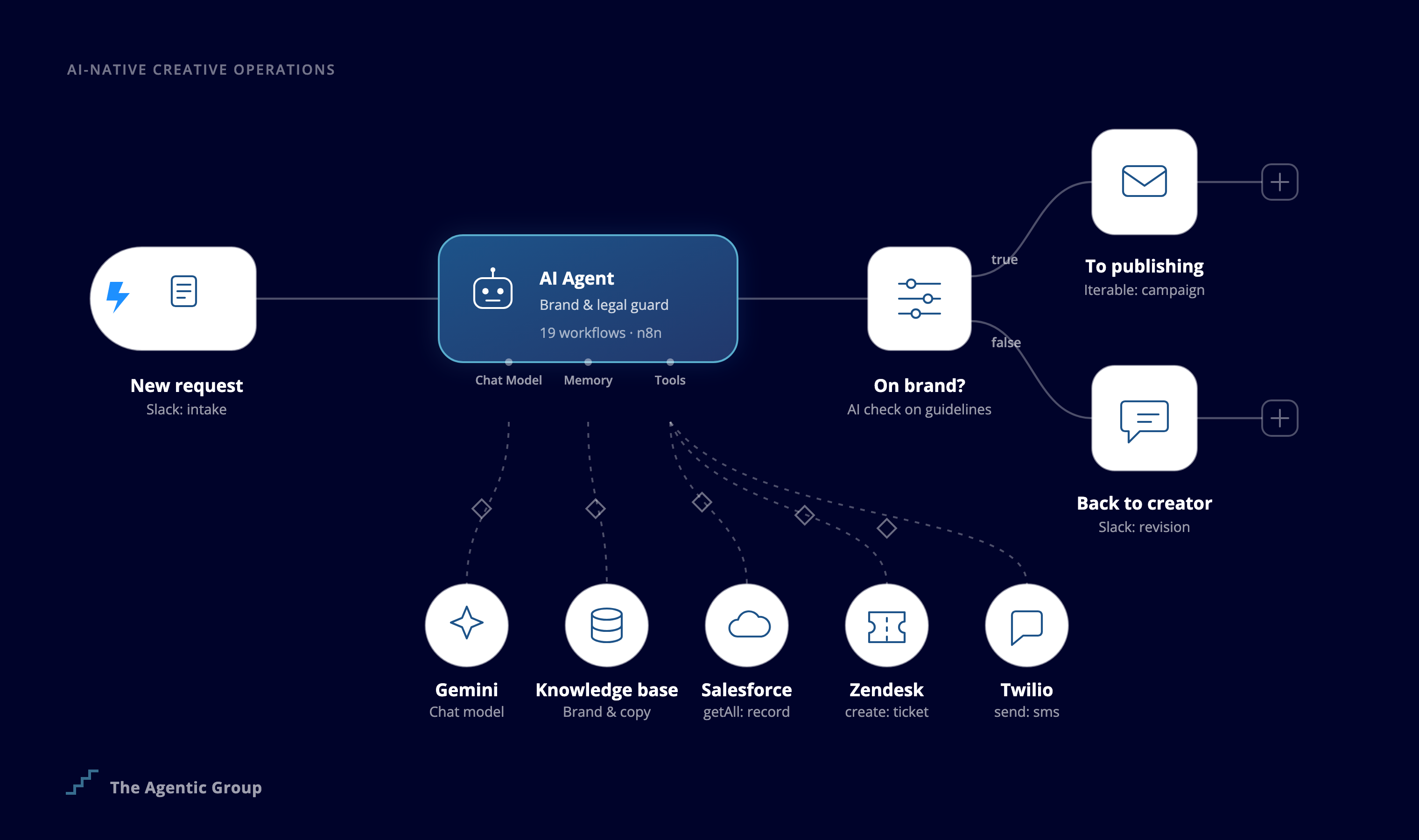
Before the meeting a file is prepared: the agenda, the long-term maintenance plan, the budget proposal and the association's details. So the agent does not start from a bare recording, it knows what the meeting is about. That is the difference between a summary and minutes.
Afterwards the transcript is retrieved and cleaned: speaker labels and timestamps out, and personal data removed before the text goes anywhere else. That order is deliberate. You do not repair privacy afterwards in the end product, you make sure it never gets in.
The agent structures the minutes per agenda item, in the present tense, and delivers a decision list and an action list alongside. Where deliberation is unclear or statements contradict each other, it does not write down an assumption but flags it: human check required here. Items that were not on the agenda end up under their own heading rather than disappearing.
The manager puts the draft next to the transcript and corrects it. That is where the judgement sits that you should not automate: how much detail an agenda item needs, whether something was a proposal or a decision, and whether the summary of a discussion does justice to what was said.
Right after the meeting there is a summary instead of a recording still waiting to be written up. Producing and sending the official minutes takes considerably less time. And because the decision and action lists come out of the same process, actions no longer stay buried in running text.
We design workflows where AI does the preparatory work and people keep the judgement.


.svg)