




Kronehoefstraat 85
5612 HL Eindhoven
BTW NL863902509B01
What is agentic AI? A guide for Dutch SMEs
qw
vc
mshm
.svg)



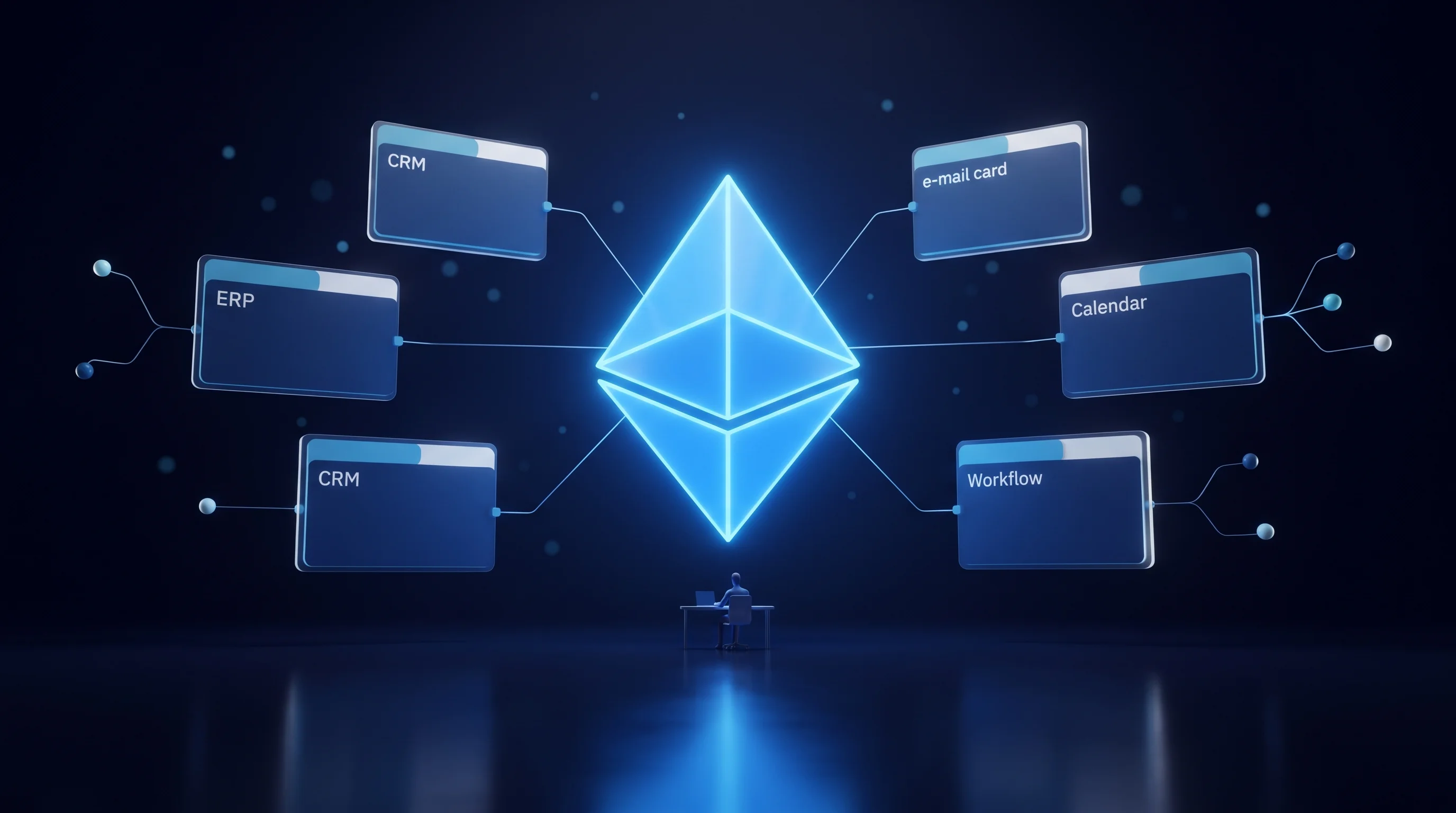
Agentic AI is artificial intelligence that independently executes sequences of actions to achieve a goal. It plans steps, calls tools, processes the result and self-corrects when something goes wrong, without a human approving every step.
That makes an AI agent fundamentally different from a chatbot. A chatbot responds to what you type and then waits for the next prompt. An agent keeps working until the task is complete, even if that requires ten steps across five different systems.
The technical foundation is a large language model (LLM), but the LLM is only the reasoning engine. It is the combination of reasoning, planning and tool calls that turns a language model into a working agent. Anthropic describes this as a system where the language model acts as an orchestrator: it determines which tool is called when, based on the current context.
An AI agent is not a chatbot with more capabilities. It is a digital employee that takes over tasks within your own systems.
Before diving deeper into agentic AI, it helps to know where it fits in the bigger picture. There are three levels of AI deployment, and most SMEs are at the first or second level.
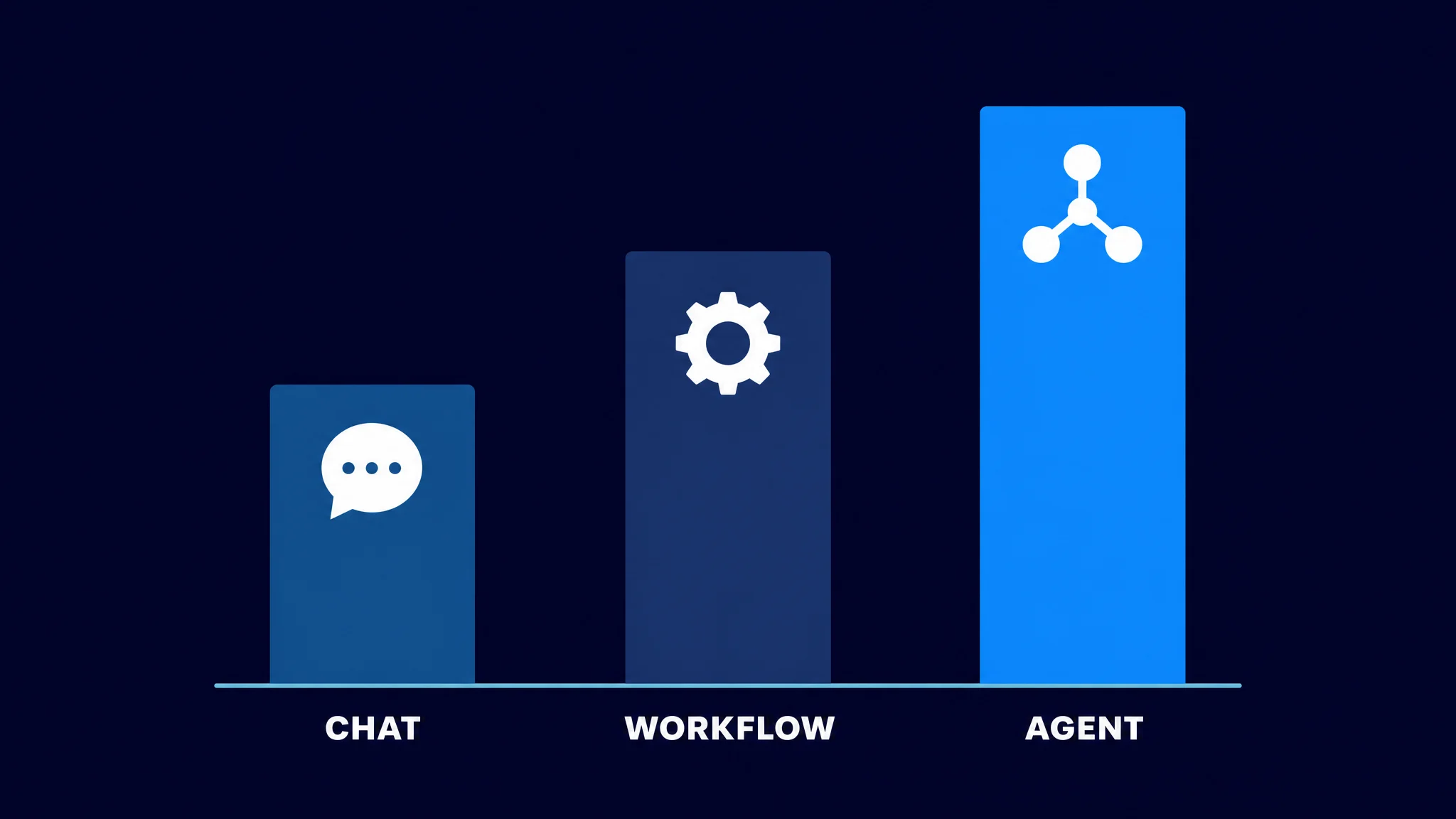
Most companies that say they are already doing something with AI are at level 1. They use ChatGPT for copy or Copilot for email drafts. That saves time, but the biggest time losses are in processes that don't run through chat: invoice processing, customer communication, data reconciliation, scheduling logistics.
At level 3, AI Agents & Process Automation handles those processes autonomously within your own systems, including the exceptions a fixed workflow cannot handle.
Generative AI creates content: text, images, code. ChatGPT is generative AI. The model produces output based on your prompt, but does not take actions outside the conversation.
Agentic AI goes a step further. It links the reasoning power of a language model to tools, memory and planning logic. As a result, the agent can retrieve data from external systems, make decisions based on that data, take actions such as sending emails or creating records, and evaluate the result before the next step.
Gartner ranked agentic AI in the top position in its Top 10 Strategic Technology Trends 2025 overview and expects it to deliver substantial business value within 2 to 5 years (Gartner, 2024). McKinsey reports that 72% of companies worldwide already deploy AI in at least one business process, but that most of those companies have not moved beyond generative AI tools (McKinsey State of AI, 2024).
Generative AI provides answers. Agentic AI takes action.
That is not a semantic distinction. A ChatGPT answer about an outstanding invoice still requires human action: someone has to open the system, type the reminder and send it. An agentic AI that flags the invoice, retrieves the customer history, drafts the payment reminder and sends it does the work itself.
An AI agent runs on a cycle of four steps. It repeats this cycle until the goal is reached or a stopping condition occurs. IBM describes this cycle as the core of every agentic system: perceive, plan, execute and evaluate, regardless of domain or sector.
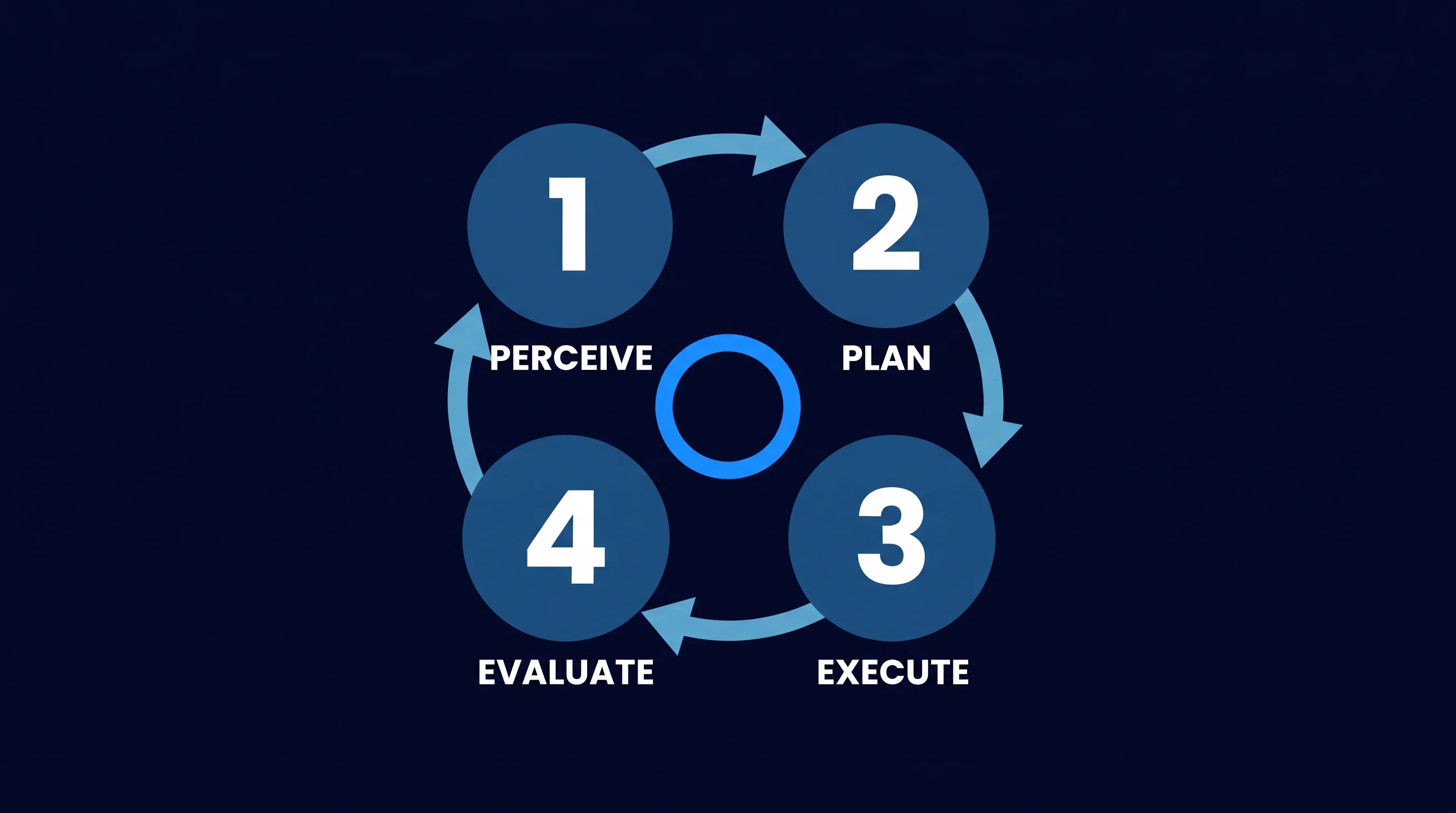
Suppose an accounting firm uses an agent to process incoming invoices. The agent receives a PDF, extracts the relevant data (supplier, amount, due date), checks whether the supplier is known in the system, creates the booking in the accounting package and sends a confirmation. If something does not match, the invoice goes to a human for review. That is the human-in-the-loop step: not for every invoice, only for the exceptions.
This hypothetical example illustrates how the agent cycle works in practice. The technical implementation varies by organisation and system, but the four steps are always the same.
In the implementations we guide, we start every agent with one well-documented process. Only after a successful pilot do we expand to adjacent processes.
An AI agent does not work by magic. It follows instructions, calls tools and evaluates the result, step by step.
Agentic AI delivers value when three conditions are simultaneously present: the process is repetitive, the data is structured and there is API access to the systems involved. Those three together determine whether an implementation makes sense. Deloitte identified in 2024 that the transition from generative AI experiments to working agentic implementations stalls for most organisations at precisely these three conditions: unclear processes, poor data quality and missing system integrations. We see the same pattern with the SMEs we work with: the three blockers are systematically solvable, but require concrete preparation before an agent is built.
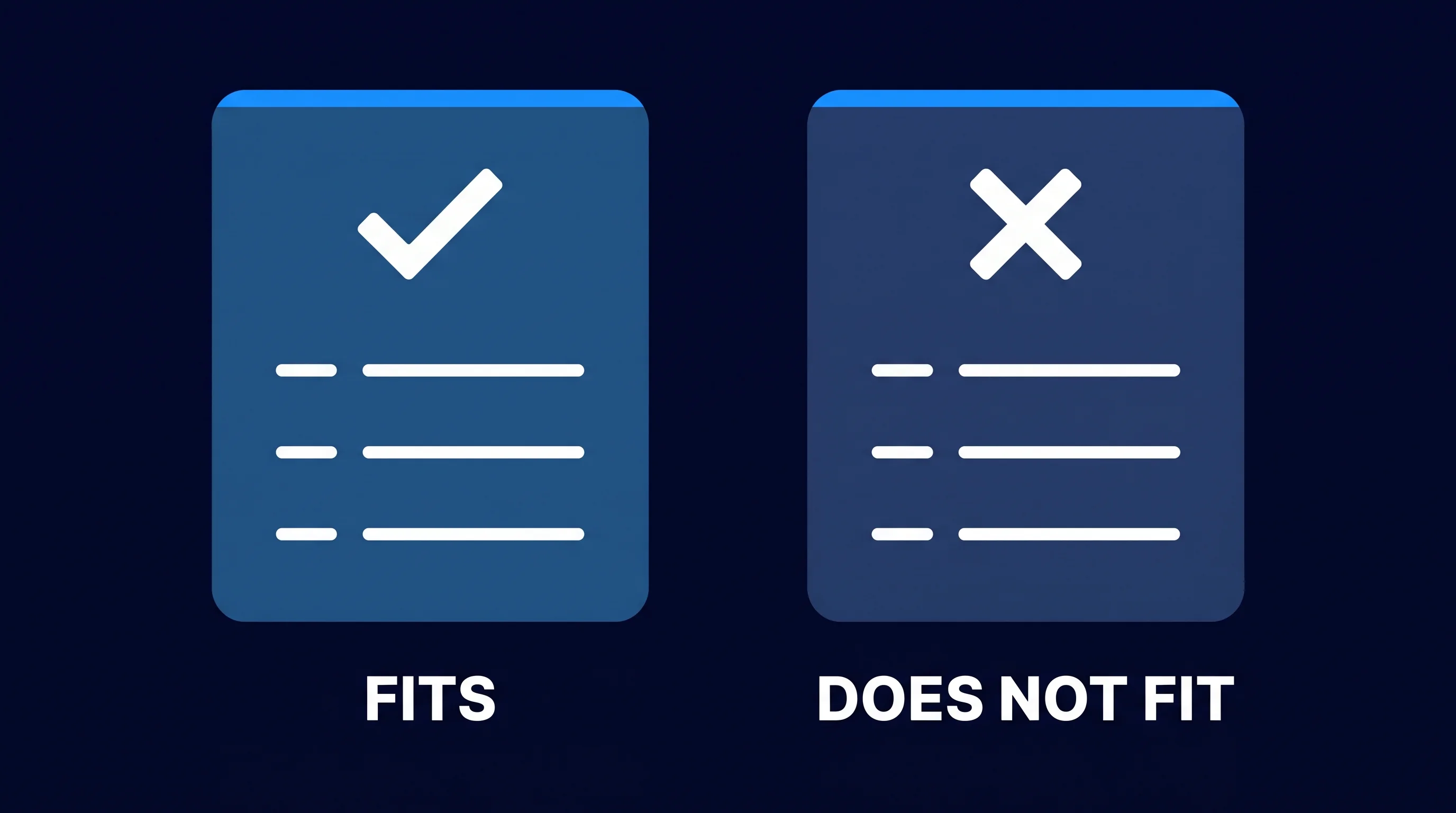
For SMEs in real estate, administration, construction or recruitment, there are typically dozens of candidate processes: lease contract processing, supplier management, candidate screening, project status reports. The first step is identifying which processes cause the most time loss and have the lowest implementation threshold.
An AI Strategy & Roadmap helps to make that prioritisation before you build an agent. Building on an unclear or poorly documented process is the most common cause of failed automation projects.
Most SMEs have more candidate processes for agentic AI than they think. The limitation is rarely the technology.
If you are currently using ChatGPT for daily tasks, that is a good starting point. The step to agentic AI is not a leap: it is a series of targeted choices you make per process. The Stanford AI Index 2024 report shows that organisations that implement AI systematically, process by process, report significantly higher success rates than organisations that opt for broad simultaneous rollout.
Describe the process you want to automate in concrete steps. Where does it start? Which systems are involved? What is the expected end result? Who handles the exceptions? The more specifically you can describe this, the faster the implementation.
An agent is only as good as the data it works with. Inconsistent or incomplete data produces inconsistent or incomplete results. Make sure the input is structured before you automate.
Via APIs or existing connectors, your systems become accessible to the agent. Google Workspace, Microsoft 365, Exact, Afas, Teamleader: most modern systems support this. The connection is the technical preparation; the agent is the logic on top.
Start with one process, one agent and measurable outcomes. After a pilot of four to eight weeks, you know what works, what needs adjustment and which processes are next in line. No big project, no big-bang implementation.
An agent is not a set-and-forget system. Monitor the output, catch the exceptions and refine the instructions based on what happens in practice. The agent does not adjust itself, but the results tell you exactly where adjustment is needed.
The AI Bedrijfsbrein is how we build a connected agent system in the client's own environment: from initial analysis to working integration, including the monitoring and adjustment that makes the difference in the first weeks.
From ChatGPT to agentic AI is not a leap. It is a step you take per process, with measurable outcomes at the end of each phase.
Agentic AI is artificial intelligence that independently executes sequences of actions to achieve a goal, including calling external tools and adjusting the plan when something goes wrong. Regular AI, such as a chatbot or generative AI, responds to prompts but takes no actions outside the conversation. The difference is fundamental: an answer still requires human action, an agent takes that action itself.
A chatbot answers questions and then waits for the next prompt. An AI agent plans steps, calls systems and keeps working until the task is complete, even if that requires multiple steps across different systems. Chatbots communicate; agents execute. They are not variants of the same thing: they are two fundamentally different ways of deploying AI.
Generative AI produces content based on a prompt: text, images, code. Agentic AI uses generative AI as a reasoning engine, but adds planning, tool calls and self-correction. All agentic AI uses generative AI, but not all generative AI is agentic. The distinction lies not in the output, but in the degree of autonomy and tool use.
Agentic AI is worthwhile when a process is repetitive, the data is structured and the systems involved offer API access. Processes such as invoice processing, customer communication, vacancy matching or inventory management are good candidates. Start with one process that involves many manual steps and has a clear definition of done. The greater the time loss in a process, the higher the potential return of an agent.
Yes, but you need guidance for the initial implementation. Most SMEs that succeed with agentic AI work with an implementation partner who handles the technical integration, configures the agent and monitors the first weeks. It does not require an in-house IT team, but it does require a clear description of the process to be automated and a willingness to carefully monitor the pilot.
Costs vary based on the complexity of the process and the systems that need to be connected. A first pilot for one process is typically the most accessible entry point: you invest in one targeted implementation with measurable outcomes before deciding to scale. Get in touch for an estimate based on your specific situation.
Start by describing one process you currently handle manually: where does it start, what are the steps, which systems are involved and what is the end result? That gives you the foundation for a first agent. The technical implementation, including system integrations and monitoring, is best organised together with a partner who has experience with agentic AI in an SME environment.
Agentic AI can be deployed safely and in compliance with GDPR, but this is not a given. It requires deliberate choices about data storage, processing agreements, system access and the logging of agent actions for auditability. We implement exclusively on EU-based infrastructure with GDPR-ready configurations. The EU AI Act places additional requirements on automated systems; we take this into account in the design of every agent.
Autonomous AI agents that operate within your own systems require more than a chatbot. We design, build and implement them for Dutch SMEs, from initial process analysis to a working integration.


.svg)