



Kronehoefstraat 85
5612 HL Eindhoven
BTW NL863902509B01
The state of the AI economy: why early adopters are pulling ahead faster
qw
vc
mshm
.svg)




Early AI adopters are pulling ahead of their competitors, recent research shows: the AI economy is growing three times faster than previous technology waves, and companies that wait now fall further behind by the day. Falling token prices don't make AI less urgent, they make the lead of early adopters even bigger.
Recent research from Exponential View (Azhar Khan, June 25, 2026) lays out the numbers: the AI economy generated $110 billion in revenue over the past twelve months, at an annual run rate now pointing toward $175 billion. That's three times faster than the internet and mobile waves at the same point in their development.
McKinsey sees the same acceleration: 88 percent of companies now use AI in at least one business function, up from 78 percent a year earlier. The share scaling AI agents across one or more functions rose from 27 to 40 percent.
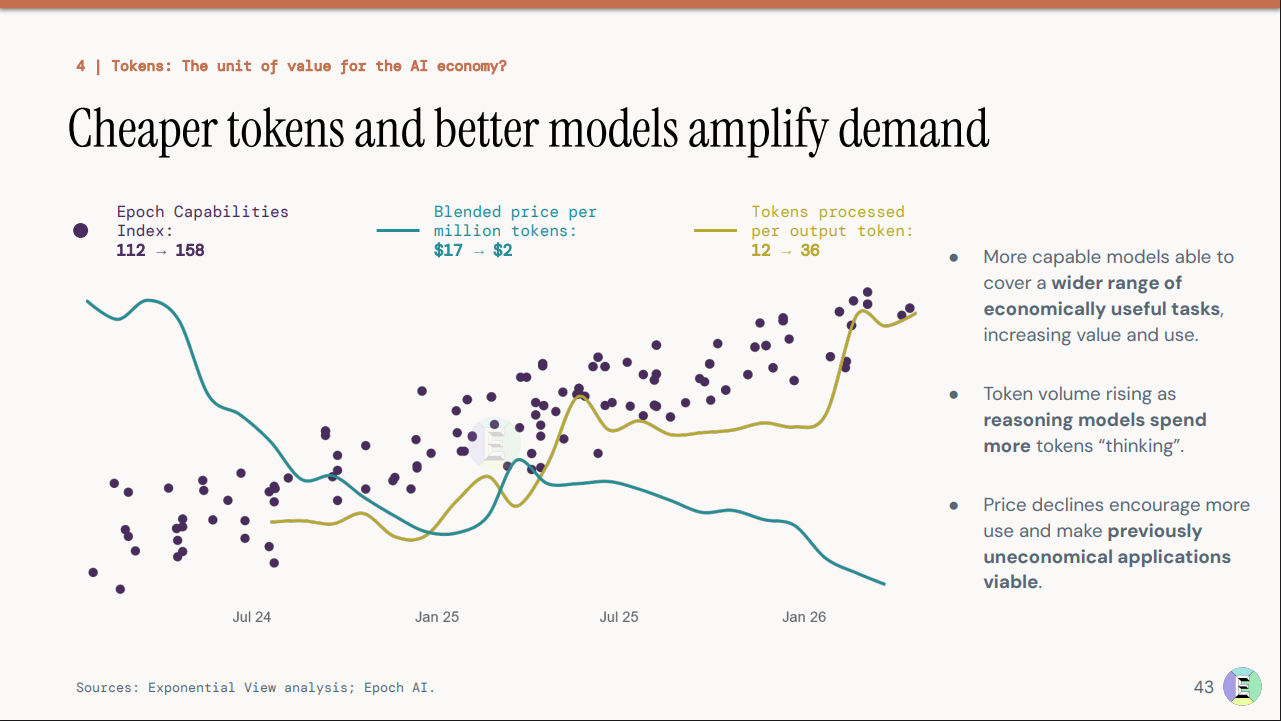
These growth figures aren't an abstract, far-off story. They explain why companies leading today are making their lead harder to close with every passing month.
For a Dutch SME, that pace often feels abstract until you translate it to your own sector. An accounting firm now using AI to prepare tax filings, a construction company that automatically drafts quotes, a staffing agency matching candidates faster: these are all examples of the same shift Exponential View measures at a macro level. The numbers are global, the effect is local and directly felt in the boardroom.
A common argument is: wait until AI gets cheaper. But Exponential View shows that a 10 percent drop in token price actually leads to 12 to 18 percent more token usage. Total AI spend rises, even as the price per unit falls.
That pattern is now measurable between companies. According to Semafor, the most active 10 percent of AI users consumed 8.3 times as many tokens per user in June as companies in the middle of the pack, up from 2.6 times in January. That gap is widening fast.
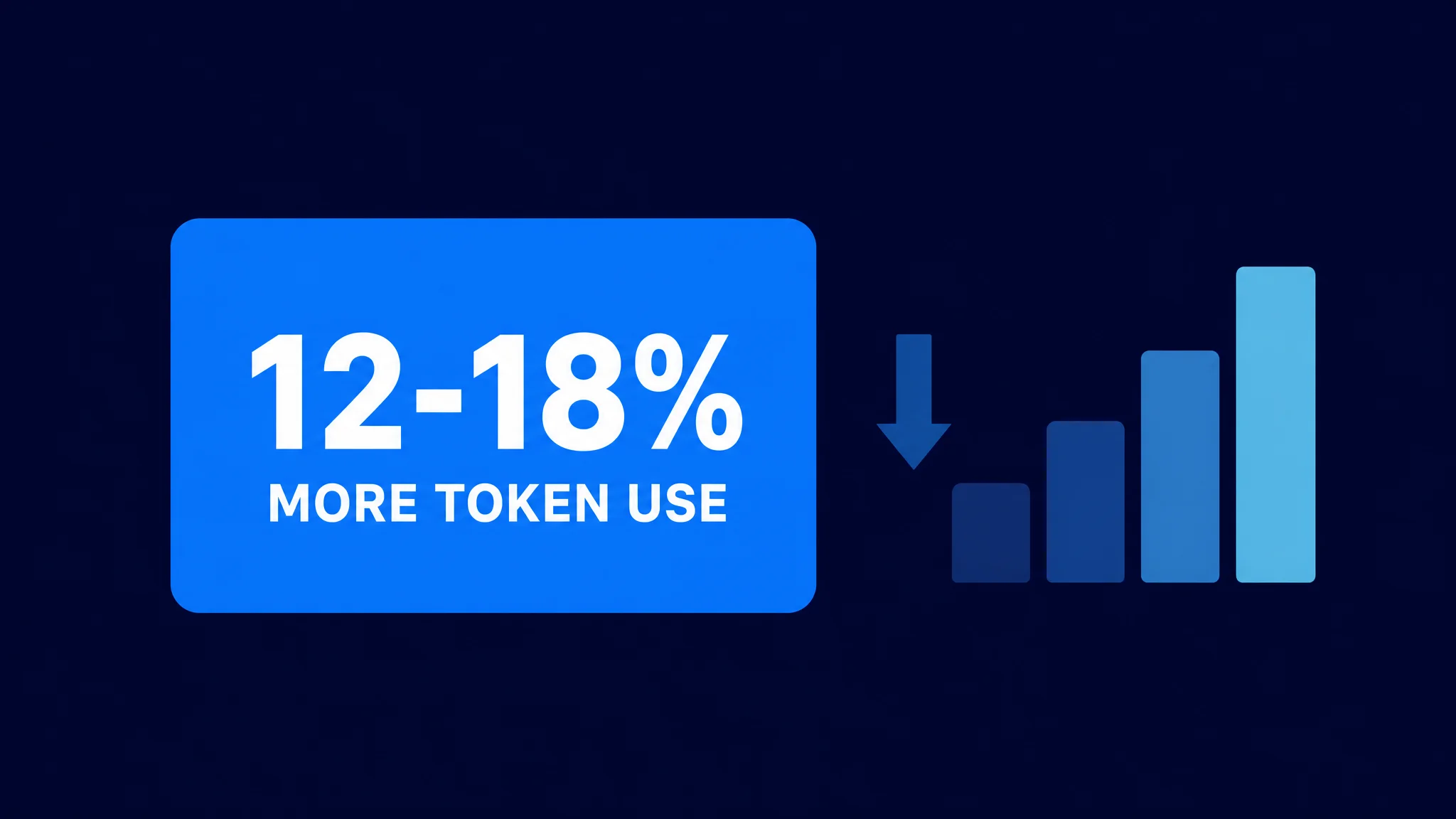
A lower price is not a reason to wait: it's the signal that the lead of early adopters is growing. Companies that put a clear AI strategy in place now benefit directly from every price drop, instead of chasing it after the fact.
Not all AI use is equal. There's a clear difference between an AI agent that completes a task independently, an automated workflow that handles a fixed process, and a chatbot that only answers once someone asks a question. According to Gartner, 40 percent of enterprise applications will feature a task-specific AI agent this year, up from under 5 percent last year.
Most SMEs are still at the chat level: employees ask a chatbot one-off questions, with the system disconnected from the rest of the organization. That's a fine starting point, but it's not the same as letting AI work across the entire organization, where systems feed each other and an agent takes steps on its own.
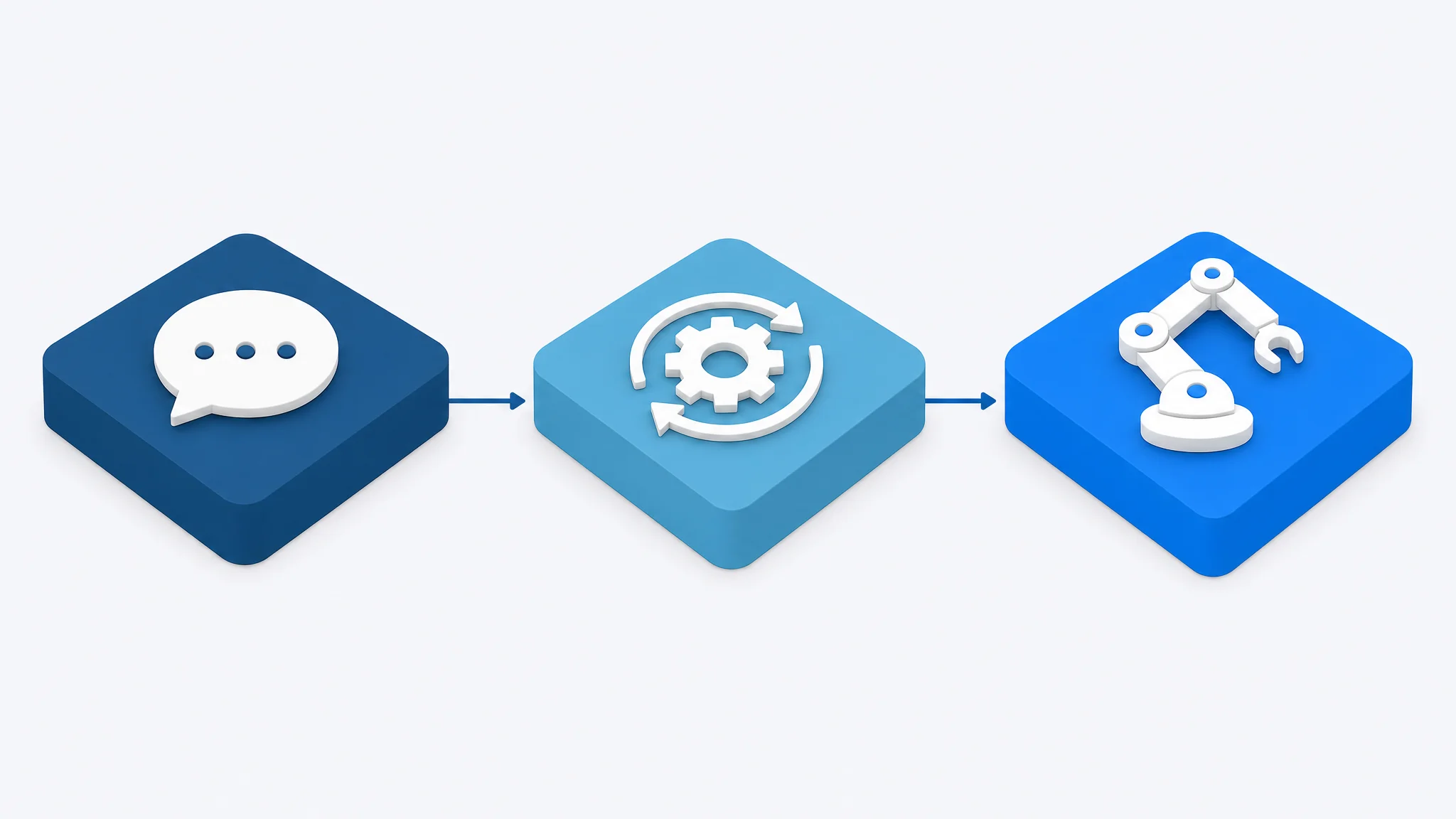
The gap in AI maturity between companies that take this seriously and companies that stop at a loose subscription grows wider every month. A standalone AI subscription is not an AI strategy.
Take a simple example: a chatbot that helps an employee draft an email saves a few minutes each time. A workflow that automatically recognizes, checks, and readies incoming invoices for approval saves hours per week. An agent that runs the check itself, spots exceptions, and only brings in a human when it's unsure shifts an entire process from manual to supervised-automatic. That's the real difference between levels, not the tool you use but how much of the process actually runs without intervention.
Many leadership teams think they're covered because everyone has an AI subscription. Research from BCG tells a different story: companies that have embedded AI strategically are over four times more likely to capture a measurable profit impact from it, compared to companies stuck in isolated pilots. Sixty percent of all companies still report little to no value from their AI efforts.
The difference isn't the tool, it's the approach. Companies leading in AI adoption tie AI to a specific process with an owner and a measurable target. Companies falling behind let AI exist alongside the work instead of inside it.
That's exactly why "we're already doing something with AI" is often a reassurance, not a strategy. Anyone without an answer to which process AI makes faster, cheaper, or better today isn't running an AI strategy yet: they're running a loose experiment.
Early adopters ask themselves three questions before starting a new AI project: which process costs the most time right now, who owns that process, and how will we measure in three months whether it's improved. Companies that fall behind skip those questions and start with the tool instead of the problem. That difference in sequence ultimately decides whether an AI project becomes a lasting part of the organization or a forgotten trial balloon.
The difference between starting now and starting a year from now is clearest side by side. Below is a comparison, based on the token price, usage and profit-impact figures from Exponential View, Semafor and BCG.
Waiting feels safe, but it's the more expensive choice. The same pattern played out with the internet and mobile: whoever got in early kept that lead for years.
A responsible first step doesn't start with a big budget, but with a sharp choice: which process costs the most time right now, and where does automation deliver results fastest. Say two comparable companies in the same sector face that choice: one picks a small, measurable pilot project around that one process, the other waits "until things are quieter." Only the first company gathers data to build on within a few months.
That's exactly what an AI pilot project is for: start small, learn fast, and only then scale to more processes. No big promise upfront, just a concrete starting point.
A responsible first step has three traits: a process with a clear owner, a measurable target you can set today, and a timeline of weeks, not quarters. Without those three traits, a pilot project turns into a loose experiment that stalls after a few months, exactly the pattern that trips up companies without an AI strategy most often.
The companies with the lead two years from now are the companies that already started this quarter.
The AI economy is the sum of all revenue companies generate from AI products and services. According to Exponential View, it generated $110 billion over the past twelve months, at an annual run rate heading toward $175 billion, three times faster than the internet and mobile waves at the same point.
Tokens are the unit AI models are billed in, and that price is falling thanks to faster, more efficient models. That doesn't make AI less relevant: every 10 percent price drop leads to 12 to 18 percent more usage, so total spend actually rises.
No. Companies already active today are building a lead that gets harder to close as time passes. Waiting means starting at the point when early adopters have already built a structural cost advantage.
A standalone AI subscription is not a strategy. Early adoption means tying AI to a specific process, with an owner and a measurable target, so you can see whether it works and where you scale.
According to Semafor, the most active 10 percent of users consumed 8.3 times as many tokens per user in June as companies in the middle of the pack, up from 2.6 times in January. That gap is widening fast.
The biggest risk isn't that AI wouldn't work, but that competitors will have already built the process, the knowledge, and the cost advantages by the time a company starts. That gap is harder to close than the first step itself.
Start with a small, measurable pilot project around the process that currently costs the most time. The Agentic Group helps with an AI Strategy & Roadmap, so that first step fits directly into a bigger plan.
At The Agentic Group, we guide Dutch SMEs through exactly this first step every day. Waiting for a lower price or a better model costs you more than it saves. With a clear AI strategy you take the first step today, instead of handing competitors a lead. Want to see what that looks like in practice first? Read how AI can work across your entire organization.


.svg)