



Kronehoefstraat 85
5612 HL Eindhoven
BTW NL863902509B01
Intelligent Process Automation for SMEs: The Three-Layer Model Explained
qw
vc
mshm
.svg)



Process automation has existed for decades. Excel macros, system integrations via Zapier, Robotic Process Automation (RPA) that mimics screen actions: businesses have long used tools to reduce repetitive work.
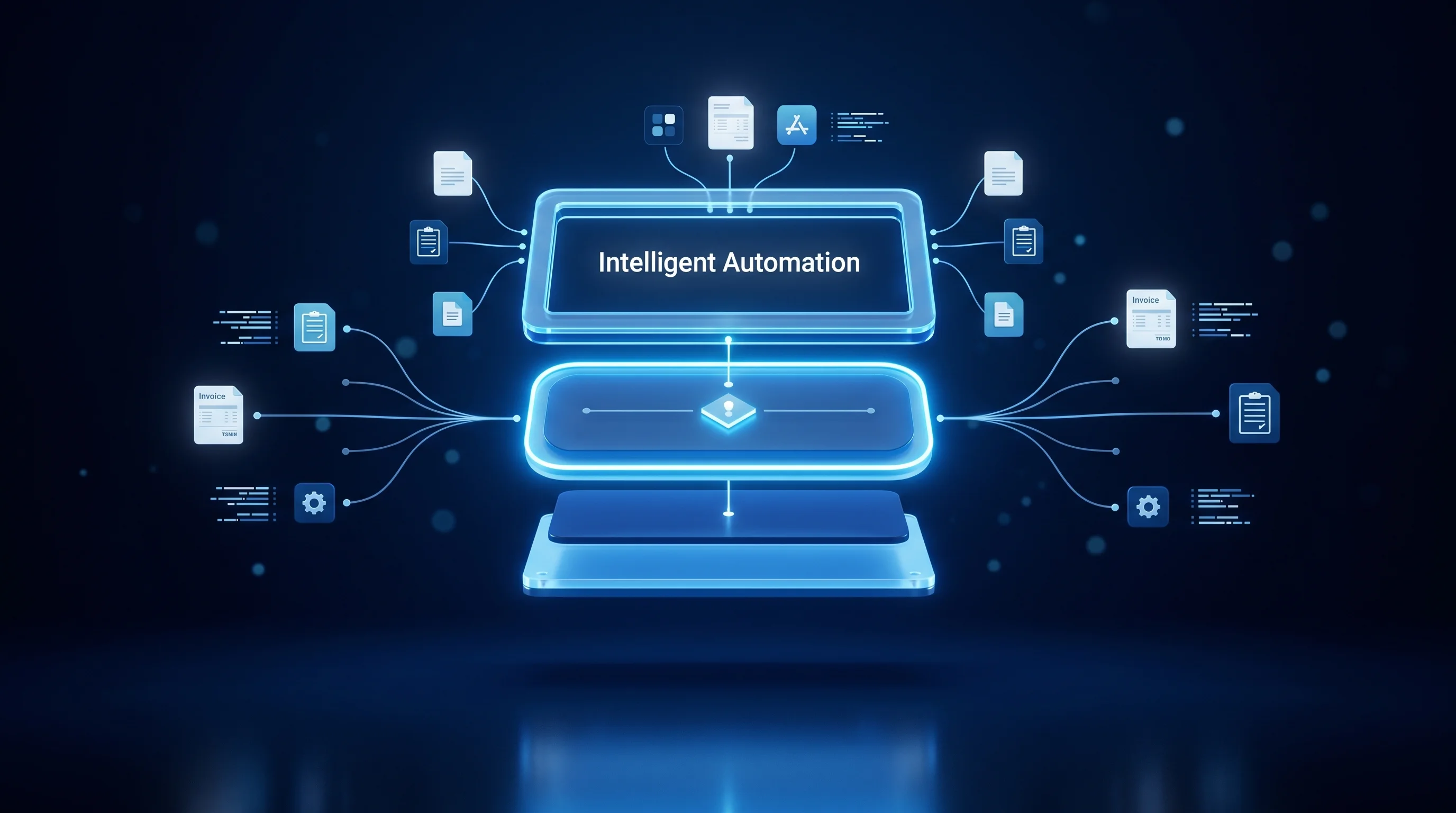
Intelligent process automation (IPA) is the next step. It combines RPA with artificial intelligence: machine learning, natural language processing, and decision models. The result is software that not only handles tasks with a fixed outcome, but also deals with variation, exceptions, and unstructured information such as emails, PDF invoices, or scanned documents.
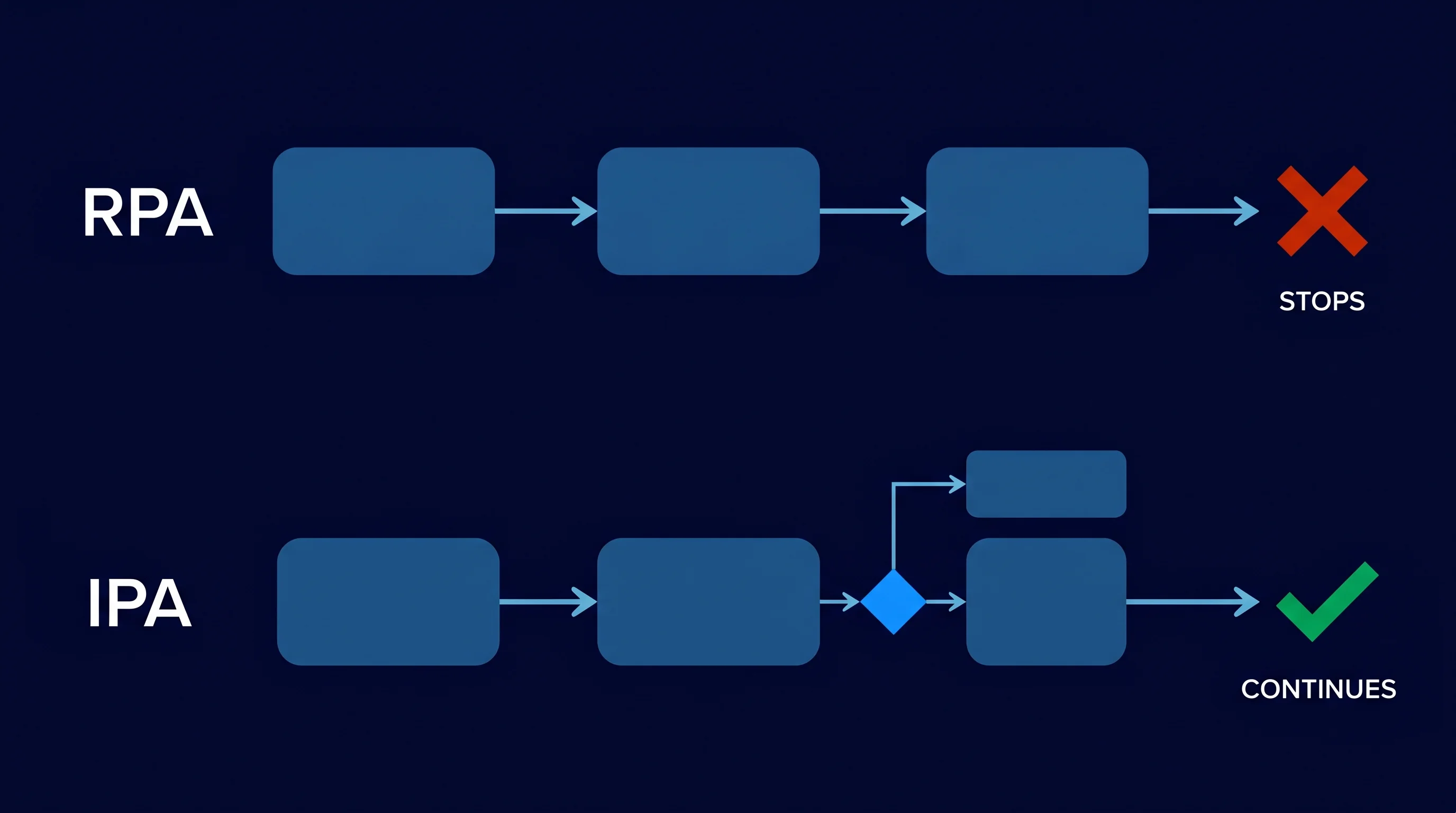
The core difference: RPA executes, IPA decides and executes.
That makes IPA relevant for processes that currently get stuck the moment something is slightly different from normal. An invoice with an unusual VAT rate, a quote request that arrives by email rather than a form, a client file with missing fields: for an RPA robot, these are obstacles. An IPA system handles them as normal variants of the same process.
The term IPA is used broadly in practice. Some vendors include workflow orchestration, document AI, and chatbots. In this article, the definition stays precise: IPA means automating processes where, alongside rule execution, decision logic is involved, driven by AI models.
To understand where IPA sits, it helps to place the three automation layers side by side. Not as abstract theory, but using a familiar process: incoming invoice processing.
Stopping at layer 1 means leaving most of the time savings behind.
The three layers build on each other. You do not need to start at layer 3. But stopping at layer 1 and assuming you are "already automating" means missing the decision logic that causes most manual correction time.
Not every process is a good candidate. The question is not "can we automate this?", but "is this process ready to be automated?"
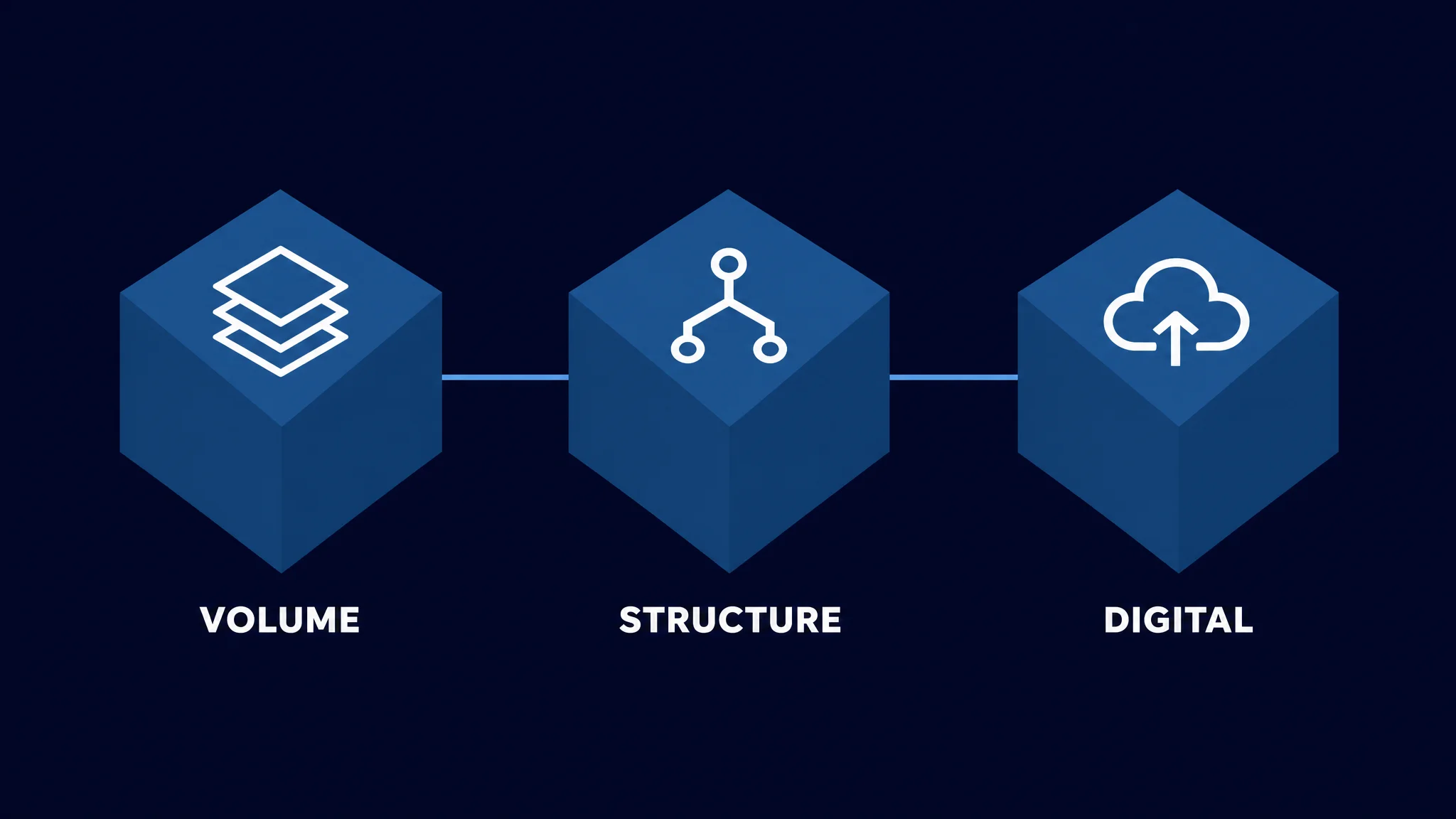
Three criteria determine readiness:
Do not automate chaos: map the process first before you begin.
A practical check: what percentage of cases are handled without human intervention? If that is below 70%, there is probably too much variation for pure RPA, but enough structure for IPA.
Processes that often work well as a first IPA candidate: invoice processing, quote follow-up, customer communication classification, contract and file processing, and report aggregation from multiple systems.
Processes less suited as a starting point: unstructured decisions requiring significant human judgment, creative work, or processes that are not yet well documented. Do not automate chaos: map the process first.
Suppose an accounting firm with 35 employees processes 80 incoming invoices from suppliers every day. As an example, to make the three layers concrete:
Step 1 (RPA): a robot reads invoices from a fixed layout and enters them into the accounting package. Everything that deviates is forwarded to a staff member. That applies to around 30% of invoices.
Step 2 (IPA): document AI is added. The software now also recognises non-standard layouts, reads free-text fields, matches invoice lines to purchase orders, and flags only invoices above a set threshold for human review. The manual correction burden drops to around 8%.
Step 3 (agentic): an agentic AI layer is added. The agent also checks the supplier contract, compares against previous invoices from the same supplier, sends an automated approval request, and closes the process once approval is received. Staff only need to step in for contract discrepancies.
Each layer reduces the manual correction burden, but the biggest jump is between layer 1 and layer 2.
This is a hypothetical example. The exact time savings depend on volume, current error rate, and process complexity. What the example shows: each layer reduces the manual correction burden, but the biggest jump is between layer 1 and layer 2.
Many publications on process automation throw around high percentages without context. Here are expectations grounded in independent research, with sources cited.
According to Grand View Research (2024), the global IPA market was valued at USD 14.55 billion in 2024 and is expected to grow at 22.6% per year through 2030. That pace reflects organisations already using IPA accelerating their rollout: payback periods are short enough to justify further investment.
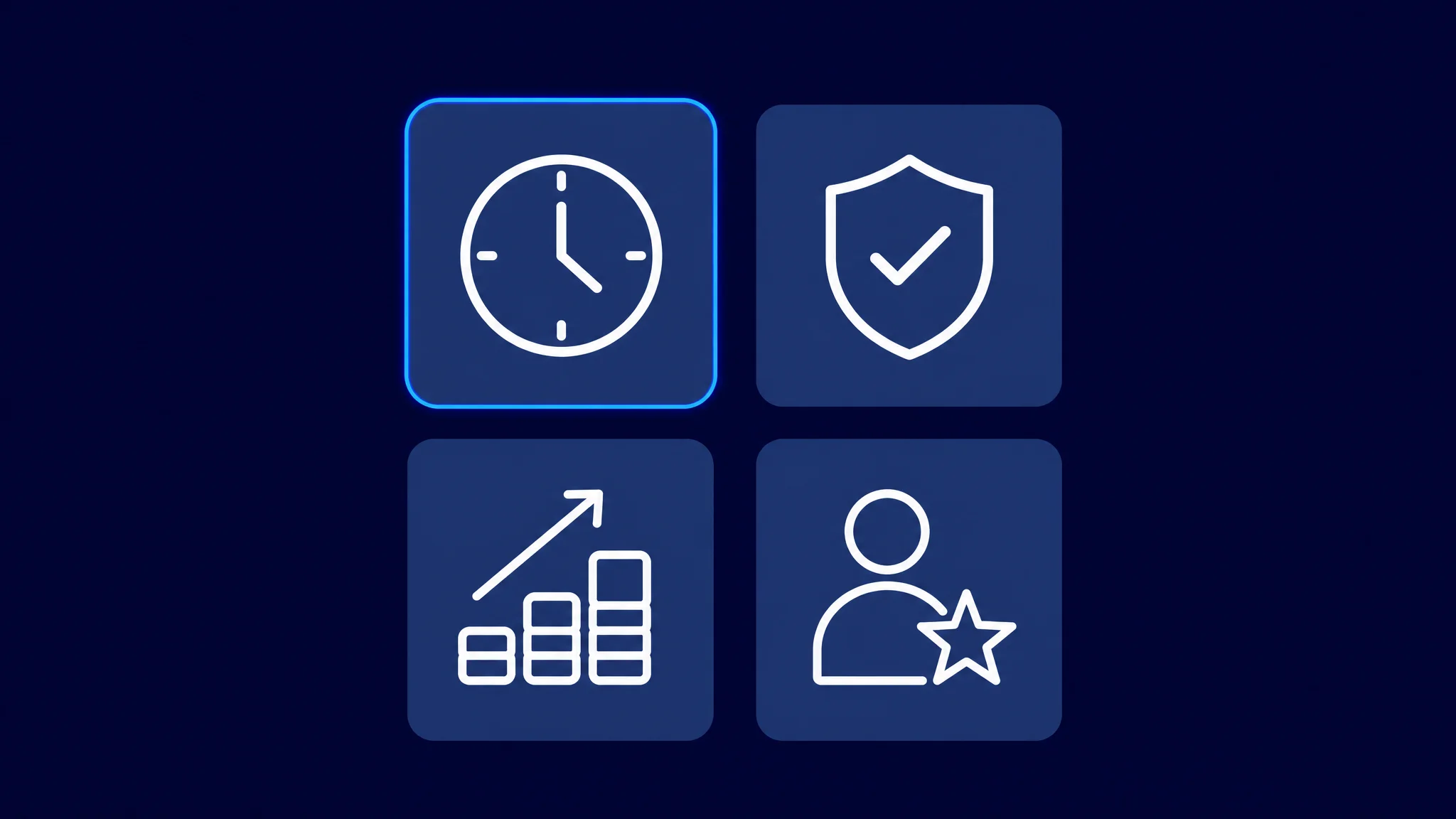
For an SME, the realistic benefits of IPA are:
Growth does not have to mean hiring more people for administrative work.
What you should not expect: an immediate, complete solution without implementation time. IPA requires a thorough analysis of the process, integration with existing systems, and a clear definition of when humans step in. That takes time upfront, but forms the basis for a system that then runs reliably.
The biggest pitfall in process automation is starting too broadly. Companies that try to tackle multiple processes at once get stuck in complexity. The alternative: start narrow, prove the value, then expand.
Start with one process, not the most complex one: that is the only approach that consistently works.
A practical framework in three steps:
Write down which repetitive processes cost the most time and generate the most errors. Ask employees directly: "What do you do every week that you would rather not do manually?" That gives you a shortlist of candidates.
Test the shortlist against the three readiness criteria from the previous section: volume, rule-based with exceptions, digital data. Choose the process that scores highest on all three. That is your pilot process.
Start with one process, not the most complex one. The goal is to have a working system within 60 to 90 days that demonstrably saves time. That proof makes it easier to tackle a second and third process.
If you want to start mapping the opportunities in your organisation but are not yet sure which processes to prioritise, an AI Strategy & Roadmap is a logical first step before you implement.
Curious what intelligent automation looks like in your business? Discover the AI Business Brain.
Most failed automation projects do not fail because of the technology, but because of the approach. These are the mistakes we see most often at SMEs that start on their own:
The right approach is the mirror image of these mistakes: start small, choose the right process, build in a human-in-the-loop, and measure.
IPA and agentic AI are sometimes used interchangeably in the market. They are related, but not the same.
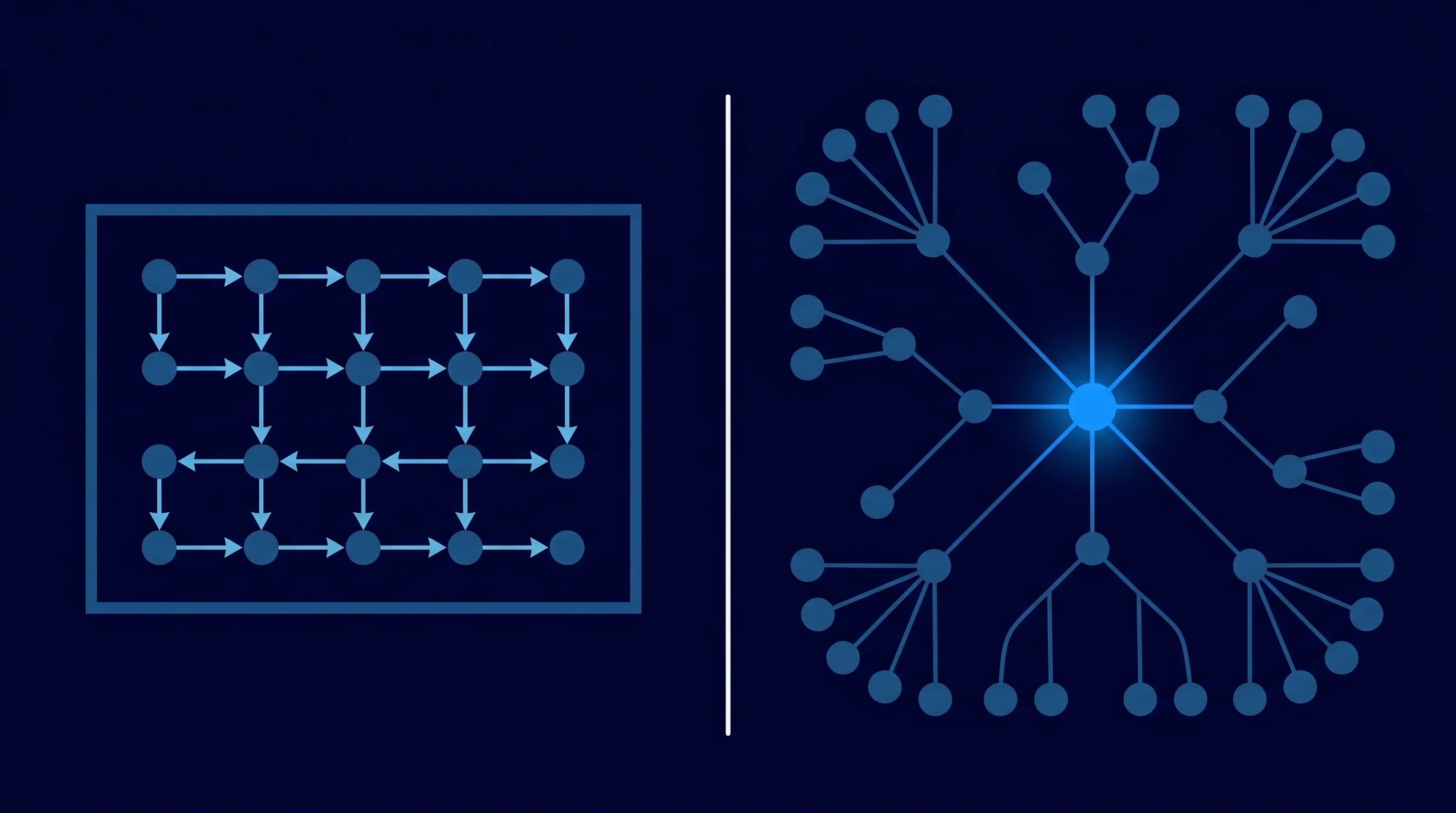
IPA automates a bounded, pre-defined process: the steps are fixed, the decision rules are set, the exception routes are configured. The system works reliably within that frame.
Agentic AI goes a step further: an AI agent is given a goal and determines for itself which steps are needed to reach it. It can consult multiple systems, retrieve new information, adjust intermediate steps, and take action across the boundaries of a single defined process.
IPA is a controlled system. Agentic AI is an autonomously acting worker with clearly defined permissions.
For most SMEs, IPA is the right starting point: it provides control, transparency, and proof of value. Agentic AI is the next layer, useful once you have one or more IPA processes running reliably and want to do more with the data and context those processes produce.
The full picture, from IPA to agentic AI to all connected systems, is what we call the AI Business Brain: a connected, working AI system that grows with your business.
The most common questions about intelligent process automation, answered directly.
RPA (Robotic Process Automation) executes fixed, rule-based tasks by mimicking screen actions: clicking, copying, filling in forms. It works well as long as the process runs exactly the same way every time. IPA adds AI: the system reads unstructured data, makes decisions on exceptions, and learns from previous outcomes. Where RPA stops at a deviation, IPA handles that deviation as part of the process.
Processes with high volume, a fixed base structure, and regular exceptions are the best fit. Examples: invoice processing, quote follow-up, customer communication classification, contract processing, and report aggregation. Processes that are not yet documented or that rely heavily on personal judgment are less suitable as a first pilot.
Costs vary considerably depending on the chosen process, the integrations needed, and the degree of customisation. A pilot on a single subprocess is significantly cheaper than a full end-to-end implementation. Most SMEs start with an opportunity analysis so that the investment is targeted at the process with the best payback period.
With a focused pilot on one subprocess, you typically have a working system within 60 to 90 days. The first measurable time savings follow quickly after that. Broader rollout across multiple processes takes longer, but builds on the lessons from the pilot.
In most cases, yes. IPA systems connect via APIs to existing software such as ERP packages, CRM systems, and accounting programmes. The integration options of your current software determine the approach: systems with good APIs are easier to integrate than legacy software without an open interface.
IPA automates a pre-defined process with fixed decision rules. Agentic AI goes further: an AI agent is given a goal and determines its own steps to reach it, including across process boundaries. IPA is the controlled foundation; agentic AI is the next layer once your processes are running reliably.
Start by documenting one concrete process: what are the steps, where does it go wrong, how much time does it take? That documentation is the foundation for any implementation, regardless of who carries it out. An external partner can then choose and implement the right tools and integrations. You do not need an in-house IT team to get started.
The main risks are: starting too broadly so the project stalls, choosing the wrong process so time savings disappoint, and not defining a clear human-in-the-loop so errors go unnoticed. Those risks are manageable with a solid pilot approach: start narrow, measure the result, then expand.
Intelligent process automation is not something you set up casually: it requires a solid analysis of which processes are ready, and an approach that fits how your business works. We help SMEs move from orientation to a working first implementation.


.svg)