



Kronehoefstraat 85
5612 HL Eindhoven
BTW NL863902509B01
AI Consulting Services: When You Need Them and When You Don't
qw
vc
mshm
.svg)




You need AI consulting once you want to tackle multiple processes at once, don't have time to figure out what works yourself, or just received a proposal you can't judge. You can often handle it yourself when it's one simple, well-defined problem with a team already using similar tools. If you're unsure, don't look at the offer, look at your own situation: how many systems need to work together, and who on your team has time for that.
AI consulting is the process where an outside firm maps your business processes, prioritizes which ones gain the most from AI, and translates that into a concrete step-by-step plan. It isn't technology sales, and it isn't loose advice about a single tool: it's a line from where you stand today to where you want to be a year from now.
That distinction matters, because the term gets used loosely. An AI strategy consulting engagement first assesses your AI maturity: which processes are already digitized, which data is usable, and who on your team can actually own that step. Skip that assessment and you end up buying separate products instead of a plan.
What it isn't: a one-afternoon workshop, a license for a chatbot tool, or a thick report full of trends. A good consulting engagement ends with a concrete step-by-step plan, not a slide deck.
The question of whether you need this gets more urgent as more companies around you get moving. In the Netherlands, 45 percent of companies with 50 to 250 employees used AI technology in 2025, up from 20 percent in 2023 (CBS, 2025). That doubling in two years means competitors in your market segment are now moving too, which is exactly why your inbox is suddenly full of proposals from AI agencies.
That doesn't mean every offer fits. A good consultant asks about your business goal first, and only then about the technology. A weaker consultant starts with a product demo and fits your problem to it afterward. You usually see the difference in the first conversation: do they ask about your processes, or do they show you a tool?
Not every company needs outside help right now. Five signals do point to the right moment.
The gap between small and large is substantial. In the EU, 17 percent of small companies used AI technology in 2025, versus 30.4 percent of medium-sized companies and 55 percent of large companies (Eurostat, 2025). Smaller SMEs aren't just behind the large players, they're also the least likely to have someone in-house who can make the translation. That makes the signals below extra relevant.
What that looks like in practice varies by sector. For an accounting firm, it's often about invoices and tax filings. For a construction company, it's more often about project planning and cost tracking.

Recognize two or more of these signals, and outside advice usually pays for itself within a single engagement. The market for it is growing fast. Global AI infrastructure spending is projected to rise to roughly $497 billion in 2026 (IDC, 2026). That partly explains why every vendor now presents itself as an AI expert.
The order in which you hit these signals also tells you something. Start at signal one or two, and you likely still have time to pick an agency at your own pace. Recognize signal three or four, and something is already at stake: you've invested money in a tool that isn't working, or you're weighing a proposal already on the table. In that case, don't buy another tool first, get someone to look at what you already have.
The reverse also holds: there's a point where outside advice is unnecessary.
In those situations, the answer is usually: start yourself, small, with one process. Save the outside advice for the moment you want to move from one successful experiment to a coherent approach.
There's another reason to start yourself first: you learn what a realistic result looks like. Someone who's run a small experiment recognizes an over-promising proposal much faster than someone who has never worked with AI at all. That experience is exactly what you need once you do move to outside advice.
A common pattern at SMEs: three standalone tools get bought first, separately, often by three different people. Only afterward does an outside firm get brought in to build a roadmap, and it turns out two of the three tools don't fit that roadmap and get written off.
That pattern isn't an isolated incident. Research from the OECD shows that 76 percent of AI-using SMEs are "AI novices": standalone tools for isolated tasks, with no integration into the business (OECD, 2025). Of those same companies, 61 percent use at least one AI application, but the vast majority of them aren't building anything coherent.
The reason isn't a lack of ambition. It's the order. Choosing tools before you know what you need costs you double: first the purchase, then the replacement. The hype around agentic AI reinforces this: vendors sell standalone agents as the solution, while the question "does this fit my system landscape" never gets asked.
This overlaps with a question we also see at the system level: when you can connect systems yourself and when you need help doing it, read our piece on system integration consulting for SMEs. The same ordering mistake plays out there, only over software connections instead of AI strategy.
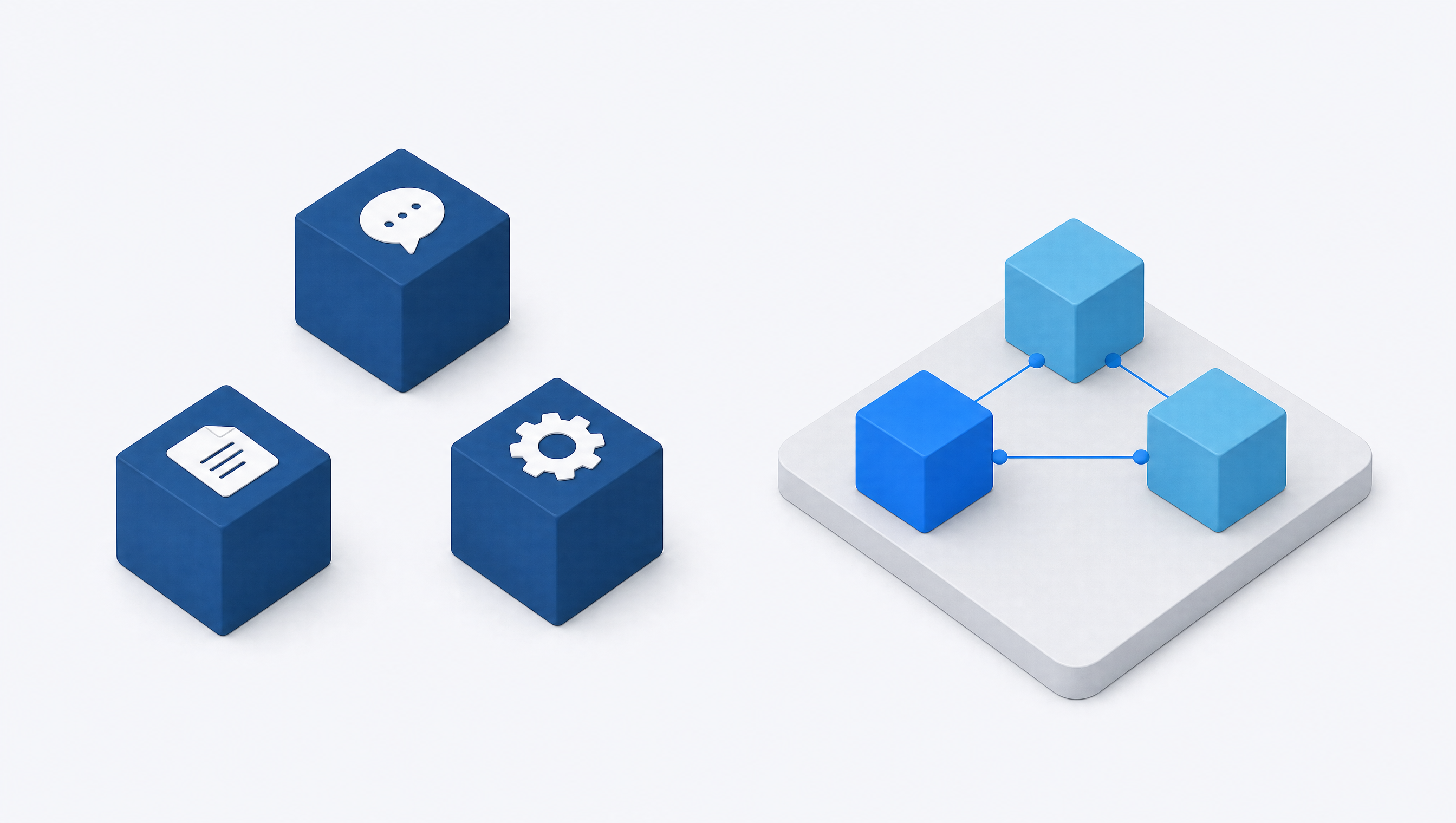
A good engagement delivers three things: a prioritization of processes by impact and feasibility, a proof of concept for the process with the highest expected return, and a step-by-step plan with ownership assigned per step. None of the three is optional.
What it doesn't deliver: a ready-made system that runs itself, a guarantee that every process can be automated, or savings you earn back without anyone on your team freeing up time. A roadmap without an owner is a document, not a change.
Don't expect a single silver bullet for your whole organization either. Most engagements start with three priority processes, not everything at once. What follows after that, rolling out to the rest of the organization, is a separate phase with a different pace.
That fits how we work ourselves: get a small number of processes truly right first, then scale to the rest of the organization. A roadmap that starts everywhere at once arrives nowhere first. The same order applies to building a system: we advise the way we build, in steps you can walk your team through.
A pattern that comes up often in those leadership conversations: the first question a director asks us is rarely about strategy, it's about a stack of tools the team has already brought in on its own. Before a single word about a roadmap gets said, we first map out which of those tools already deliver something and which stand apart from the rest. Only then do we build the roadmap around what stays, instead of the other way around.
The tooling differs by sector too. For a real estate firm, it's often about contract management and viewing schedules. For a staffing agency, it's more often about rosters and time tracking.
The choice between starting yourself and outside advice comes down to three things: scale, time, and risk. Here's how they differ in practice.
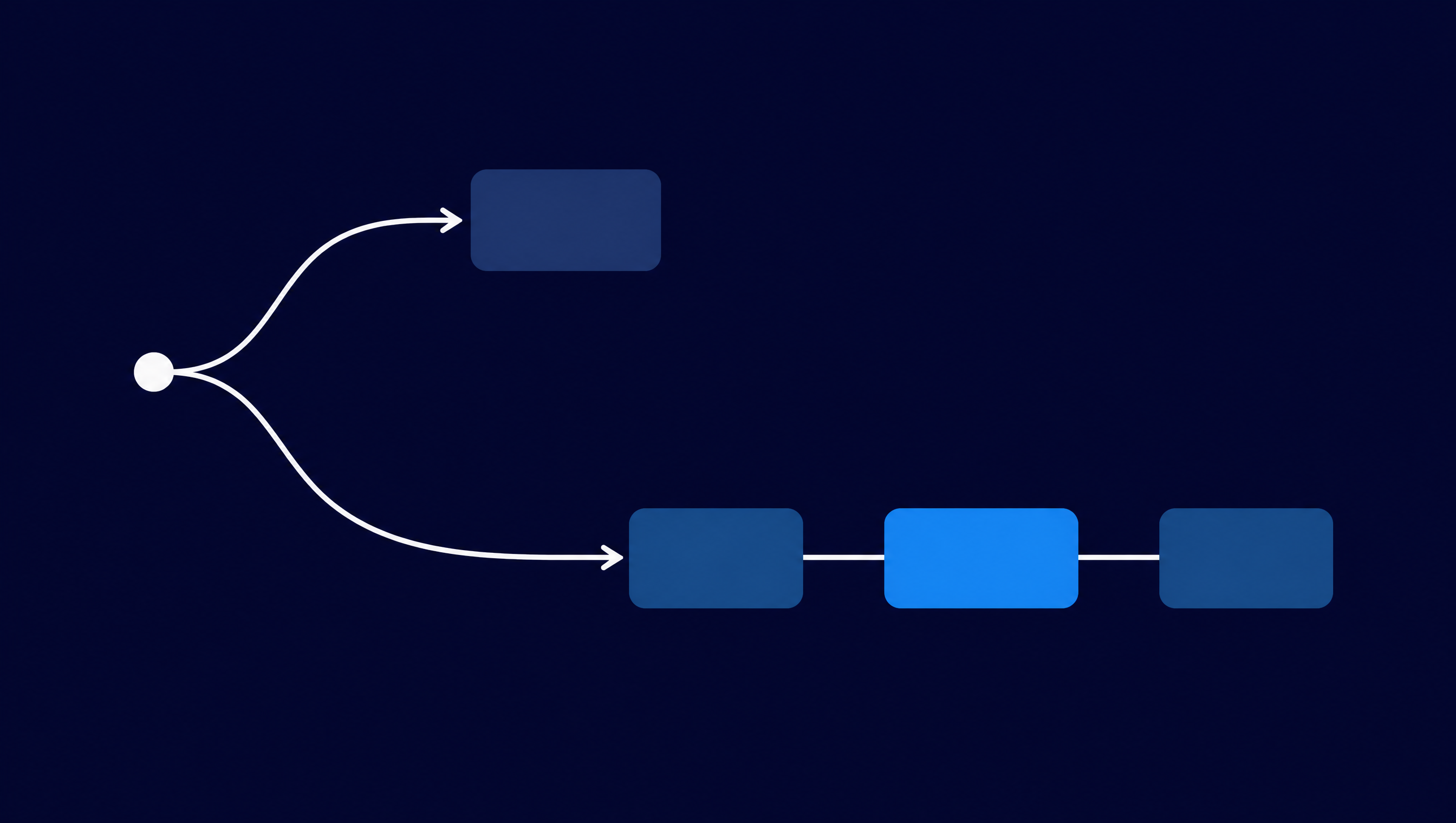
Most proposals look professional. The difference sits in four questions you can ask yourself before you sign.
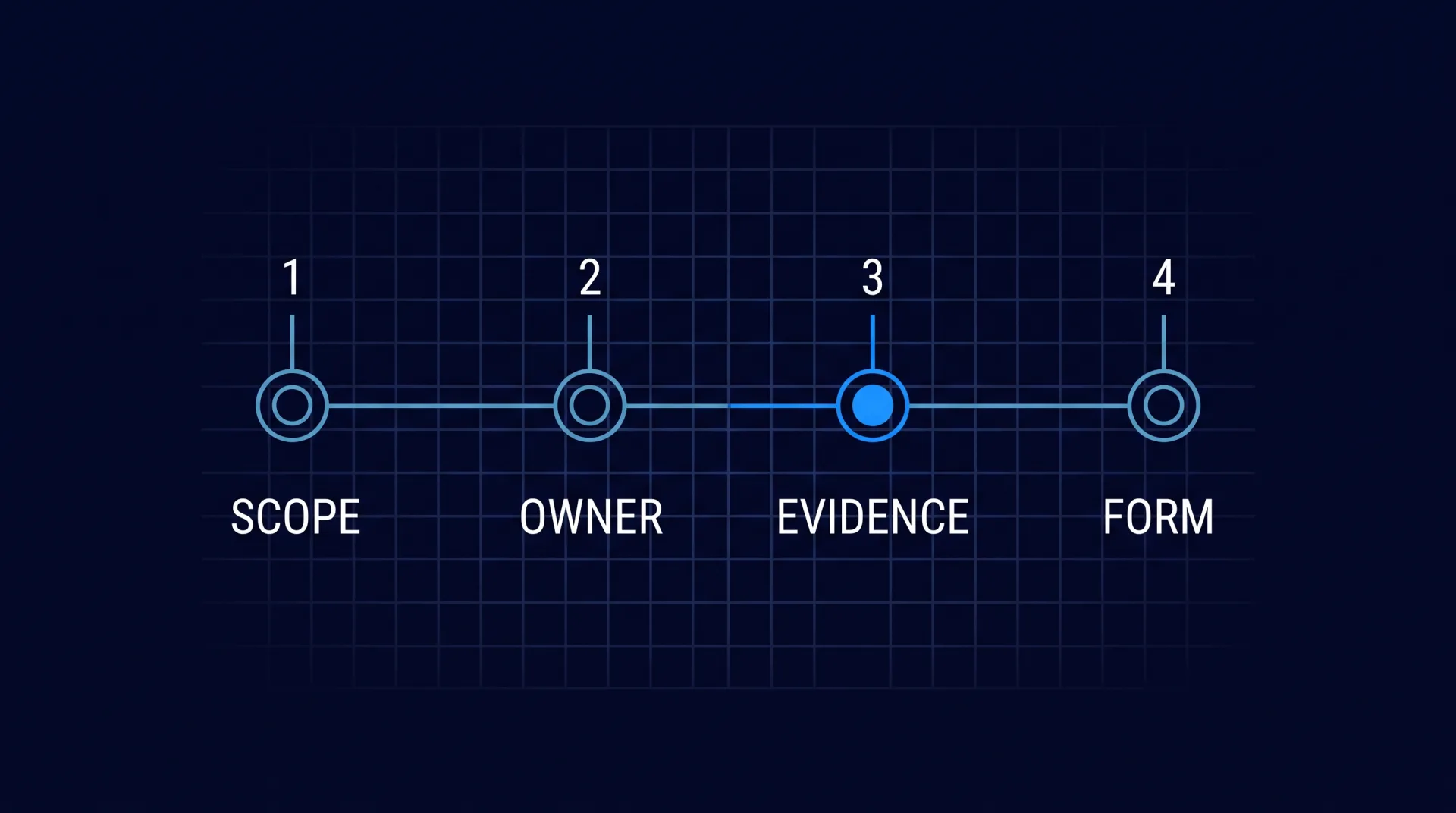
Question 1: is the scope a process, or a technology? A good proposal starts with a business problem, not a tool. "We implement AI agents" isn't a scope, "we shorten the turnaround time of your quoting process" is.
Question 2: who owns each step after delivery? A step-by-step plan without a name attached goes nowhere. Ask specifically who on your team, not at the agency, becomes responsible.
Question 3: is there evidence from comparable engagements? Not necessarily a client name, but a concrete example of a similar process and what it delivered.
Question 4: does this fit a one-off engagement, or ongoing guidance? A one-off engagement works well for a well-defined roadmap. Want someone who checks in monthly on whether execution stays on track? Then a Chief AI Officer on a fractional basis often fits better than a one-off consulting engagement. For that alternative, see Fractional Chief AI Officer.
One last check that often gets skipped: does the agency ask about compliance with the EU AI Act (European Commission), or does that topic get skipped over? An advisor who ignores compliance leaves you with a risk that only becomes visible once it's too late.
Ask these four questions before signing, not after, in the first conversation. An agency that answers them well earns your confidence. An agency that talks around them gives you information that's just as valuable: now you know to keep looking.
Price depends on four things: the scope (one process or several), the timeline, how many departments are involved, and whether implementation is included. A one-off roadmap for three priority processes costs less than that same engagement plus the first implementation. Always ask for a proposal with a fixed scope. That way you compare agencies on the same thing, not on hourly price. Ask explicitly in the first conversation for a price indication for your situation too.
Consulting determines what you build and in what order: it delivers a prioritization and a step-by-step plan. An implementation partner then builds the actual connection or agent system. Some agencies do both, but they remain two separate steps with their own outcome.
Yes, if you're tackling one well-defined process and have someone in-house who gets the time to look into it properly. Once you want to prioritize multiple processes at once, it gets harder to stay objective about what delivers the most.
A one-off roadmap for three priority processes usually takes a few weeks to a couple of months, depending on how many departments are involved. An engagement that also covers the first implementation runs longer.
A prioritization of processes by impact, a proof of concept for the process with the highest expected return, and a step-by-step plan with an owner per step. No ready-made system, but a concrete starting point.
Once you want more than just a plan, you also want someone who checks in monthly on whether execution stays on track and adjusts course as processes change. A one-off engagement stops once the roadmap is delivered, a fractional Chief AI Officer stays involved.
Check whether the scope starts with a business problem instead of a tool, who becomes the owner of each step after delivery, and whether there's evidence from comparable engagements. Also ask explicitly about EU AI Act compliance.
No. Companies that have already bought standalone tools often benefit the most from an outside engagement. An advisor helps decide which tools stay and which get written off, before the bill keeps climbing.
Good advice starts with an honest answer to whether you need it now. We think along with you realistically, not toward a service but toward the right next step.


.svg)